
The Pickle Jar
The 4,000-Year-Old Indian Art of Building Umami

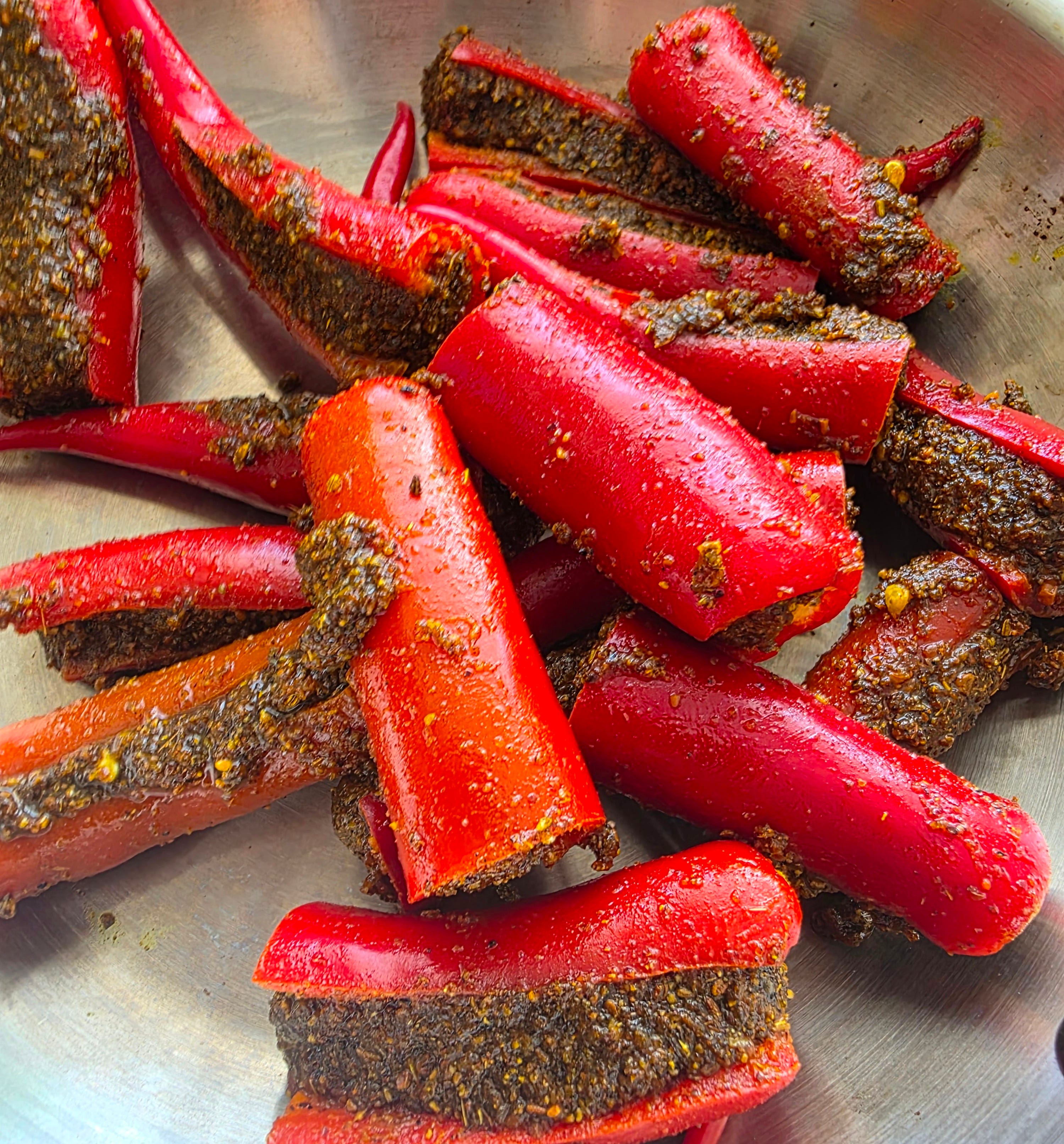
Welcome. If you are new here, I am so glad you found your way to my table. If you already support me, welcome back to yet another adventure.
This is a space where I write about Indian food not as a recipe to execute, but as memories to excavate. As history, survival, and inheritance folded quietly into things we eat without thinking.
Today, I want to talk specifically about red chilli achaar. The one I have chased my entire adult life.
But to understand why a jar of pickles can hold that much meaning, we have to begin somewhere unexpected.
We have to begin with smell.
The Shop Called Batra’s
Growing up in Bhopal, my parents took me to a small family-run pickle shop called Batra’s. I think I could still find it blindfolded.
The smell reached you before the doorway did. Sharp mustard oil. Roasted fennel blooming in warm air. Asafoetida, that pungent, sulphuric spice that smells almost alarming on its own, but transforms everything it touches. Sweet jaggery underneath it all. Vinegar. Sour raw mangoes. Red chilli powder catches in the back of the throat.
The whole place smelled alive in a way that is genuinely difficult to describe to someone who has never stood inside an Indian spice market. Spice shopping in India is not transactional. People talk, argue, taste, tell stories, and debate which farm grew the best mangoes that season.
Large steel containers lined the walls, each holding a different world. Sweet mango pickle. Garlic pickle darkened over weeks of slow oil-curing. The lime pickle softened until it became almost marmalade-like. Rare kerdi ka achaar from Rajasthan, made with wild desert berries that most cities in Indian have never tasted. Thick translucent amla murabba, glowing golden under the shop lights.
My parents had gone there for years, so the owner knew us. Every visit, he sat me on the counter while my parents tasted and debated. Every single time, he handed me a small steel bowl of sweet amla murabba. That tiny bowl became the whole ritual.
If you want to understand what a Murabba is, you might want to read a fantastic post by food writer Elli Benaiah on Plum Garumba - Where he take us on a journey from a recipe only known to his family and the cook.
Coming back to the story .While , I sat swinging my legs while he told stories. Stories about women in nearby villages making giant seasonal batches of pickle at the start of every summer. About small, homemade businesses supplying him with recipes nobody had ever written down. About chilli harvests tasting different depending on how much rain fell that year.
At that age, I thought he was chatting.
Now, I understand that he handed me an education in an invisible food economy, one that existed long before the modern world started calling things “artisanal” or “farm-to-table.” Long before those words became marketing language, generations of Indian women quietly sustained local economies through pickles, papads, preserves, and spice blends made in their own courtyards.
These were not products. They were agricultural knowledge preserved in oil and salt. Women passed that knowledge down, almost always without a single recipe card.


Indian Pickles Are Very Old
India’s relationship with pickling is not a trend. It stretches so far back that the timeline feels staggering.
Food historians trace Indian pickling practices back more than 4,000 years to the Indus Valley Civilisation, where people likely preserved food with salt and oil. Necessity drove the process: extreme summers, unpredictable monsoons, and the need to store food without refrigeration.
The ancient Indian medical texts, the Charaka Samhita and the Sushruta Samhita, contain some of the earliest written records of Indian food knowledge. Scholars date the Sushruta Samhita to the 6th century BCE and place the original composition of the Charaka Samhita between the 4th and 2nd centuries BCE. Both texts mention preserved foods, fermented preparations, and medicinal spices that are still used in Indian pickles today.
Mustard. Fenugreek. Turmeric. Ginger. Asafoetida. Salt. The same spices, thousands of years later.
What makes Indian pickling genuinely sophisticated is how deeply it has adapted to geography. Every region developed its own preservation logic based on climate and local crops. In Rajasthan, people aggressively pickled hardy wild berries and beans with oil and spice. Coastal communities developed seafood pickles. Gujarati’s turned sweet-sour profiles into an art form. Andhra Pradesh built an entire cultural identity around chilli-heavy pickles so iconic that avakaya, the mustard mango pickle, still travels across the world as a taste of home for the Telugu diaspora.
Pickles became maps. Maps of climate, trade routes, migration, and desire.
Unlike many other pickling traditions that rely heavily on vinegar, Indian achaar historically relied on oil curing, salt curing, sunlight, and slow fermentation. That distinction matters enormously.
Indian achaar is not simply a pickled food. It is a slow alchemy of chemistry unfolding over weeks. Flavour building quietly in the dark of a pantry while you wait.
The Portuguese Changed Indian Food Forever
Here is the part that stops most people cold.
Red chillies, the ingredient so central to Indian food that most people cannot imagine the cuisine without them, did not originate in India. Chillies came from the Americas. In 1498, Vasco da Gama arrived on India’s Malabar Coast, and Portuguese traders later introduced chillies to India through Goa during the 16th century.
Before that, Indian cooks relied on pippali (long pepper) and, to a lesser extent, black pepper for heat. Red chillies did not exist in Indian kitchens. Green chillies did not either. The civilisation that built ancient spice routes had never tasted a chilli.
Can you believe that ?
Yet within a few generations, India absorbed chillies so completely that they became inseparable from regional identity. My grandmother’s red chilli pickle, the one I still chase, would not exist without a Portuguese ship and a 16th-century trade route.
Indian cooks did not simply adopt chillies. They remade them. They stuffed them, dried them on rooftops under the summer sun, ground them into countless masalas, and pickled them in mustard oil until they became something entirely different.
This is one of the most beautiful things about Indian food history. It absorbs influence constantly, takes something foreign, something that arrived on a ship, and within a generation turns it into tradition. It makes you wonder how many things we confidently call “original” that have arrived from somewhere else.
The Science Behind Why Indian Pickles Taste So Deep
A good achaar is not simply spicy. Spice is almost the least interesting thing about it.
A good achaar tastes salty, sour, bitter, sharp, earthy, and layered all at once. Every flavour arrives in sequence. Your palate has to work. This is where the word “umami” becomes important: that deep savoury resonance you find in Parmesan, miso, aged cheese, or anchovies. Indian pickles develop that depth naturally through ageing, fermentation, slow oil curing, and time.
The Inspiration to write this post actually arrived when I was reading Aki moroto’s and Lisa McLean’s post on Umami. There was a discussion on whether Indian food writers ever explored umami? I had to dive in. If you want to understand Umami in depth, Aki and Lisa explain it in their post below.
A fresh mango pickle and a six-month-old mango pickle from the same jar taste like entirely different foods. The fruit softens. The oil darkens and thickens. The spices stop shouting and start speaking slowly.
Mustard oil carries flavour aggressively across the palate in a way that vegetable oil simply cannot. Fenugreek seeds bring bitterness that lifts everything else. Salt amplifies flavour. Sunlight slowly changes the texture and chemistry of a surface over weeks beside a window.
Different parts of India have different flavours, but the basic remains the same. Recently, I came across Lisa McLean’s
It’s a stuffed mango pickle and a fantastic Christmas in Goa. Do give this a read too.
Indian households understand this process instinctively, the way people understand something they have watched their mothers and grandmothers do for years, without anyone ever explaining the chemistry. That is why a simple meal of rice and dal can feel complete with just one spoonful of achaar beside it. Not louder. Not busier. Just complete.
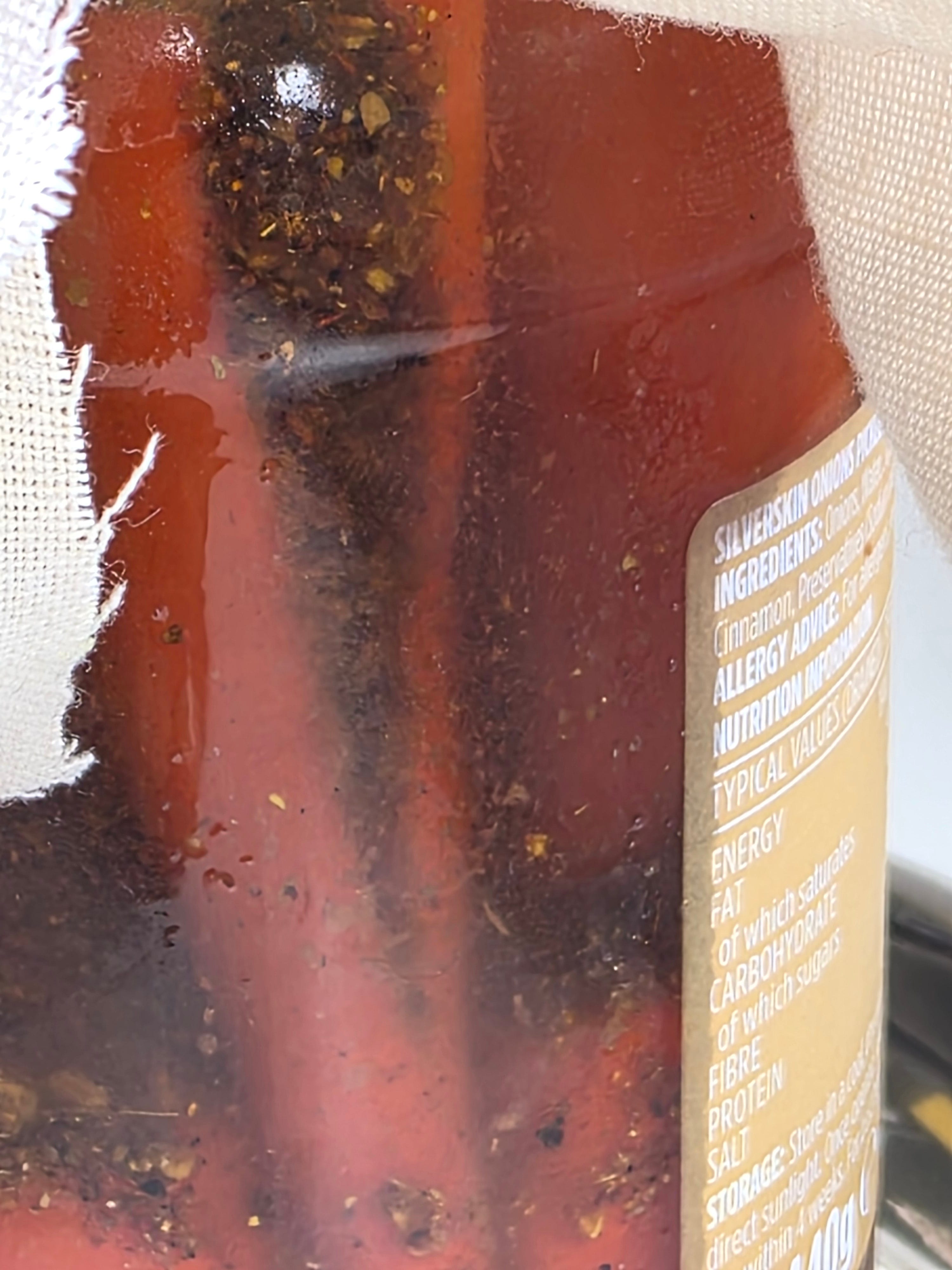
Let’s Cook The Stuffed Red Chilli Pickle That I have been talking about for so Long
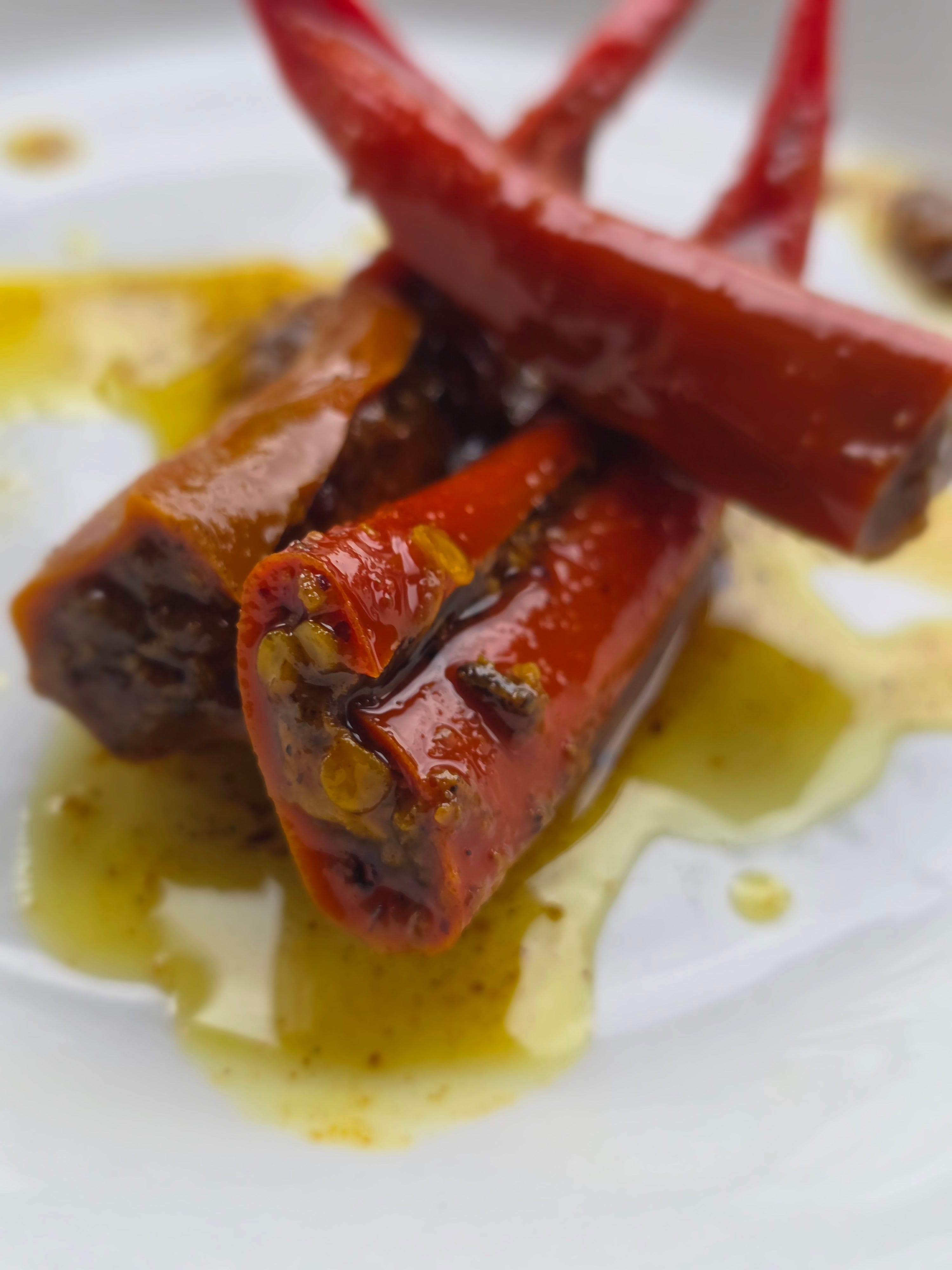
Ingredients
250 g large red chillies ( Could be any kinds, Whichever is local to you )
1 cup mustard oil
Juice of 2 lemons
3 tbsp salt, or to taste
4 tbsp black mustard seeds
2 tbsp fennel seeds
2 tbsp fenugreek seeds
2 tbsp cumin seeds
1 tbsp black peppercorns
1 tbsp carom seeds (ajwain)
1 tbsp black salt
1 tbsp turmeric powder
2 pinches asafoetida (hing)
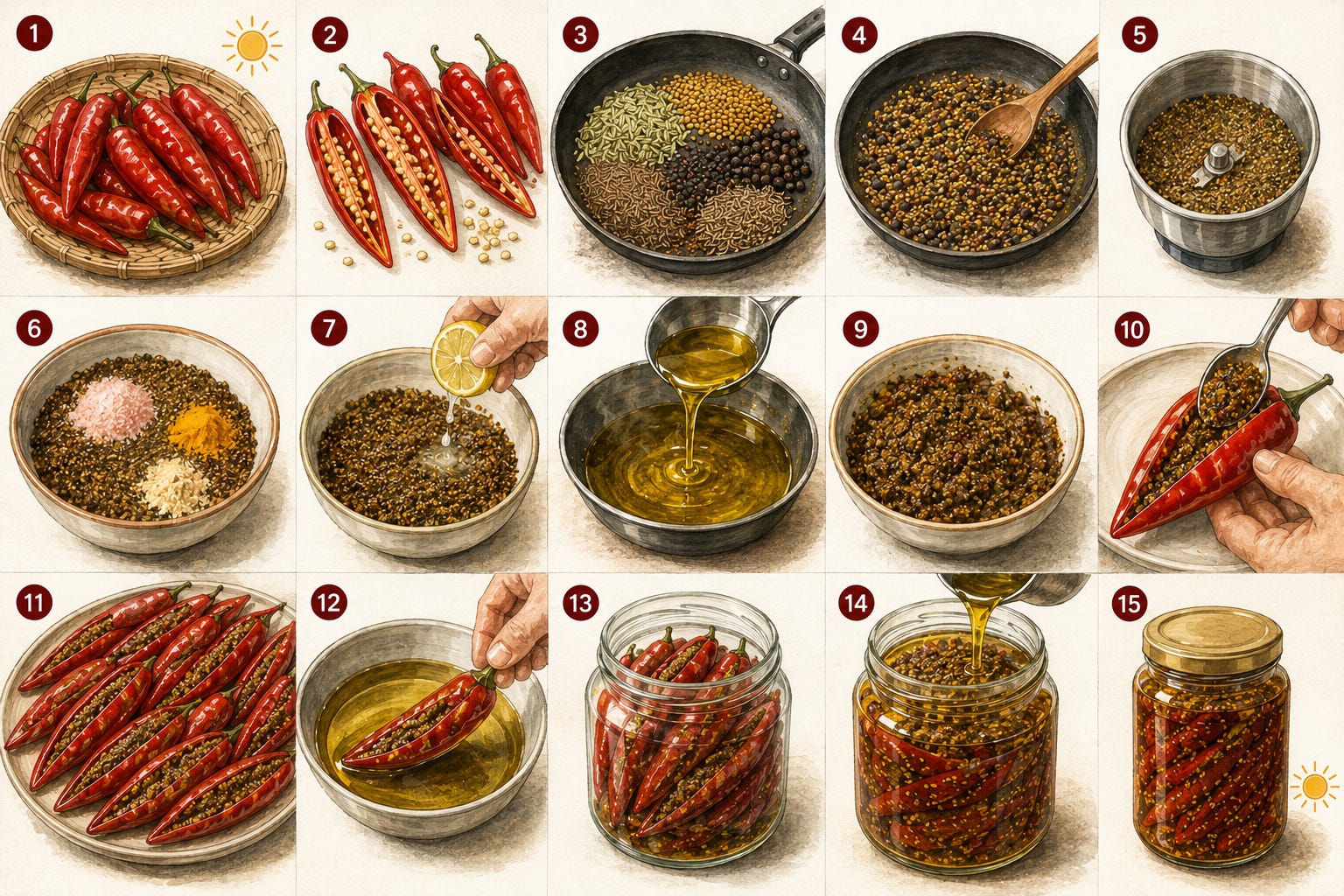
Method
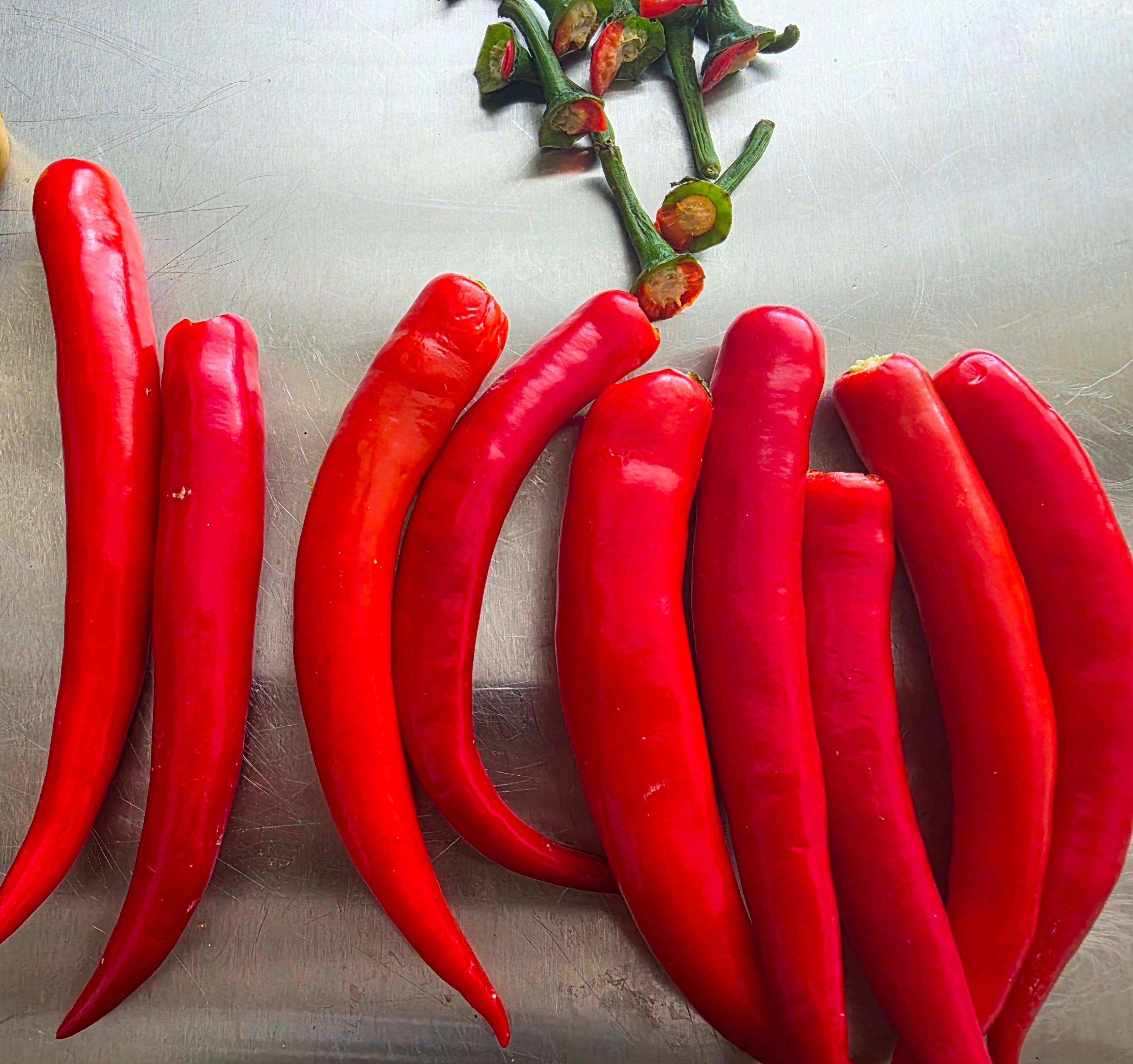
1. Prepare the Chillies
Wash the red chillies thoroughly and spresd them out in the sun for 2 to 3 hours until completely dry. Remember - any moisture can spoil the pickle.
Remove the stalks. Slice each chilli vertically down the centre without cutting all the way through. Gently remove the seeds and inner pulp, reserving the seeds for later.
2. Roast the Spices
Heat a dry pan over low heat.
Add all the fennel seeds, fenugreek seeds, cumin seeds, carom seeds, and black peppercorns. Roast lightly for about 2 minutes until fragrant. Do not brown them heavily.
Transfer the spices to a plate and let them cool completely.
3. Grind the Spice Mix
Add the roasted spices and regular salt to a mixer jar. Pulse into a coarse mixture.
Coarsely grind the black mustard seeds separately, then combine them with the roasted spice mixture.
Add the reserved chilli seeds back into the masala.
Mix in the black salt, turmeric powder, asafoetida, and fresh lemon juice.
4. Heat the Mustard Oil
Pour the mustard oil into a pan and heat until it reaches the smoking point.
Turn off the heat and allow the oil to cool slightly.
Add 2 tablespoons of the warm oil to the spice mixture and mix it well. The masala should feel moist enough to hold together when pressed.
5. Stuff the Chillies
Carefully fill each slit chilli with the prepared masala, pressing it in firmly.
Place the stuffed chillies on a plate as you finish each one.
6. Coat with Oil
Pour the cooled mustard oil into a bowl.
Dip each stuffed chilli lightly into the oil and place it into a clean, dry, sterilised glass jar.
Once all the chillies are packed, scatter any remaining masala over the top and pour the rest of the mustard oil into the jar. The oil should lightly cover the chillies. Aa more heated oil if you think the Chillies are not covered
7. Mature the Pickle
Cover the jar with muslin cloth when in son, so the moisture can evaporate and leave it in sunlight or in a warm spot for 3 to 5 days. If you are also in bit humid places like me, make sure to close the lid on top of the muslin cloth once the sun is gone. After day 5 You can keep the lid on and let it age.
Shake or gently rotate the jar once daily to evenly distribute the oil and spices.
The chillies will gradually soften and absorb the masala as the pickle matures.
Download you Recipe Card Here
What I Do With Leftover Achaar Masala
Because the oil and spice at the bottom of the jar deserve their own life
Here is something most people do not learn until they have lived with a jar of achaar long enough.
The masala, the spiced oil pooling at the base of the jar, matters just as much as the pickle itself. After the chillies have disappeared, the jar still holds weeks of slow-infused mustard oil, carrying every spice and every layer of flavour that the pickle has developed. Throwing it away would feel like discarding a good broth.
I use it constantly.
Chilli cheese toast. I spread a thin layer of achaar masala directly onto bread before adding cheese. The oil sinks into the bread as it toasts. What comes out carries a depth and heat no hot sauce has ever given me.
Spicy scrambled eggs. I whisk a spoonful into raw eggs before they hit the pan. The mustard oil, fenugreek, and residual salt bloom slowly into the eggs as they cook. The best scrambled eggs I have ever made came from an almost-empty pickle jar.
Wrap base. I spread the masala thinly across the flatbread before adding filling. Roasted vegetables, paneer, grilled chicken, everything tastes more intentional when it sits on a flavoured base instead of plain bread.
And the version I return to most often: the shawarma wrap.
Flatbread spread with achaar masala. Chicken cooked until charred at the edges. Fresh vegetables. Something cool and crunchy against the heat. A spoonful of yoghurt or quick tahini.
It should not work as well as it does. Shawarma and Indian pickle come from entirely different food histories, continents, spice traditions, and culinary logics. But mustard oil and fenugreek have something to say to cumin and garlic.
They are interested in each other.
The wrap tastes better than it has any right to. And that, if you think about it, is the entire story of Indian food things arriving from somewhere else, meeting what already existed here, and becoming something entirely new.
Achaari Potatoes - Dice potatoes into small cubes. Take some Achaar masala and stir fry the potatoes right into it.
Merry Marinade - Add just the masala in some yoghurt, add some herbs and marinate your meats for a fantastic BBQ. This is my most go-to recipe on a sunny day.
Achaar is not a condiment. It is not a side dish. It is edible continuity. A way knowledge survives. A way memory survives. A way grandmothers survive long after the recipes become an inheritance.
And somewhere inside all of it still sits a tiny shop in Bhopal, and a small girl eating sweet amla murabba from a steel bowl while a man talks about pickles as though they are the most important thing in the world.
He was right.
Thank you for reading and for being part of this journey through Indian food and the stories it carries. I am grateful for every reader who walks through these kitchens with me.
Next week, another recipe that is a feeling of its own, A little experiment and lots of historical chatter .
Till then, keep reading, keep cooking, and keep eating!


This was so interesting. Well written, beautifully researched. The mastery and layering in Indian cuisine is often magic. It is always fascinating to learn more.
So fascinating, Harshita! I remember trying the Indian lemon pickle for the first time. I got hooked and added it to everything I could think of.
I hope you will consider writing a book about all the spices and their combinations that constitute umami .